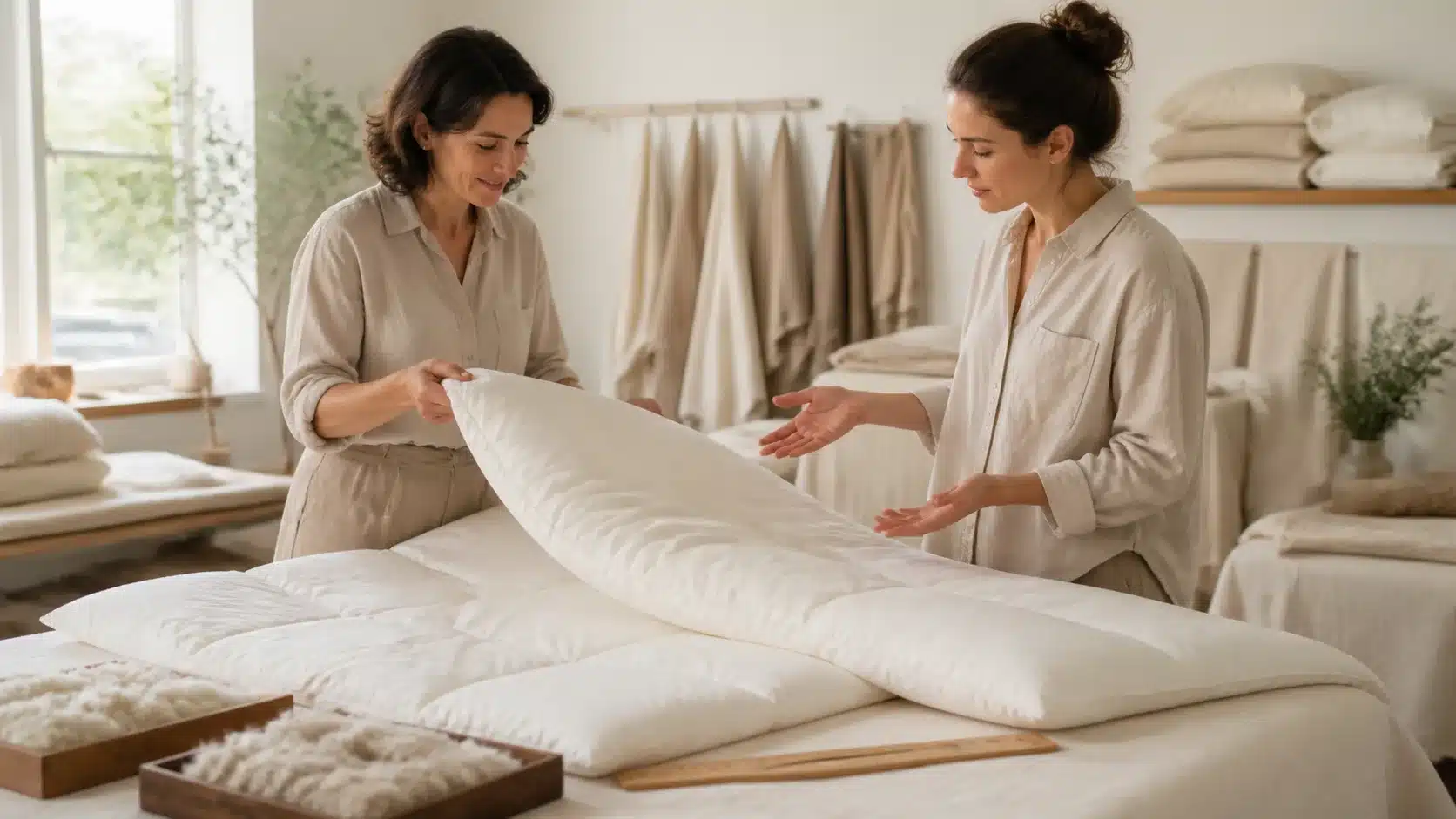
A premium wool duvet inner needs to keep you warm without feeling heavy or stuffy. That balance matters most on those in-between nights when the weather cannot quite make up its mind. When you get it right, you fall asleep faster, wake up less, and feel more rested in the morning.
Across Australia and New Zealand, spring and early autumn evenings can start mild, turn cool at 3 a.m., then warm up again as the sun comes up. A heavy winter duvet is too much, but a thin summer cover leaves you shivering. The sweet spot is a duvet that gives cosy warmth with a light, breathable feel. That is where natural fibres like alpaca and wool shine, and where a carefully designed inner can keep up with changing seasons and changing sleep needs.
Find Your Perfect Winter Sleep Balance
On those shoulder-season nights, you might go to bed feeling warm from the day, then wake up pulling the covers up around your ears. Or you might fall asleep fine, then kick off the duvet at midnight because it suddenly feels like too much.
A good premium wool duvet inner aims to smooth out those swings. It should:
- Keep your body at a comfortable, steady warmth
- Feel light on your body so you are not wrestling with it
- Let extra heat and moisture escape before you start to overheat
Local climates across our region can shift quickly, especially in coastal areas and cooler southern parts. A duvet that understands these patterns does a better job at keeping you comfortable all night, instead of only being right for one narrow temperature range.
Why Warmth and Weight Both Matter for Sleep
Sleep is very sensitive to temperature. If you are too hot, your heart rate can rise, you toss and turn, and your sleep becomes lighter. If you are too cold, your muscles tense, your body works harder to stay warm, and you wake more often to adjust your bedding.
There are two different but connected ideas here.
- Warmth
This is about how much insulation the duvet gives. It affects:
- How quickly you feel warm when you get into bed
- Whether you stay warm during the coldest part of the night
- How much your body has to work to keep its core temperature steady
- Weight
This is about how the duvet actually feels on your body. Some people love a gentle, cuddling weight that makes them feel safe and grounded. Others sleep best under something that feels almost weightless. The feel can be just as important as the warmth rating on the label.
Natural fibres like wool and alpaca respond to both of these needs. They help create a soft microclimate around your body, slightly warmer than the room, with moisture kept in balance so you stay snug, not sweaty.
How a Premium Wool Duvet Inner Manages Heat
Wool and alpaca fibres are clever by nature. Each fibre has a crimped shape that creates tiny air pockets. These pockets trap warm air, which works like insulation. At the same time, the fibres can absorb moisture vapour from your skin, then release it into the air.
That means a premium wool duvet inner can:
- Keep you comfortably warm without creating a wave of trapped heat
- Move humidity away from your body so you do not feel clammy
- Adjust as your temperature changes through the night
There is an important difference between feeling warm and feeling hot. Warm feels calm and cosy. Hot feels sticky, restless, and uncomfortable. A well-balanced wool duvet inner is built to keep you in that warm zone, not tip you into heat build-up.
For early spring and late autumn, this balance is especially helpful. Central heating, closed windows, or synthetic bedding can all stack up and cause overheating. Natural fibres work against that, offering insulation with breathability, so night sweats are less likely to wake you.
Understanding GSM, Loft and Duvet Weight
GSM, or grams per square metre, is a simple measure of how much filling sits in a set area of the duvet. As a rough guide, a higher GSM usually means more warmth. But it does not always mean the duvet will feel heavier on your body.
The real feel depends on:
- Loft, or how puffy and airy the filling is
- The type of fibre blend used
- How the inner is quilted and stitched
A lofty fill traps more air, which can give plenty of warmth without a big, heavy feel. Smart quilting patterns spread the fill evenly so you do not get cold spots or clumps.
As a broad reference:
- Light duvets sit at the lower end of GSM, great for warm nights
- Mid-weight duvets cover most of the year in temperate climates
- Warmer duvets have higher GSM for cooler winters or very cold sleepers
By adjusting GSM, loft and fibre mix, a premium wool duvet inner can feel lighter and softer than you would expect from its warmth level.
Matching Your Duvet Inner to Your Body and Climate
The best duvet is not just about the label, it is about your body and your bedroom. Helpful things to think about include:
- Are you a hot, neutral, or cold sleeper?
- How well insulated is your home, especially the bedroom?
- What are winters and shoulder seasons really like where you live?
Hot sleepers and those in warmer parts of Australia often do well with a lighter or mid-weight inner, especially when paired with breathable cotton or linen sheets. Cold sleepers or those in cooler New Zealand regions might prefer a mid- to warmer-weight inner, with the option of an extra throw at the foot of the bed.
Couples rarely have identical temperature needs. You can balance this by:
- Choosing a middle warmth duvet and adjusting sleepwear for each person
- Layering a light throw on one side only
- Focusing on breathable natural fibres in both duvet and sheets
For menopausal hot flushes, allergies, or asthma, the goal is a calm, stable sleep space. Natural fibres that breathe and resist moisture build-up can help reduce that clammy, itchy feeling that often triggers more wake-ups.
Choosing the Right Kiwi Wool Duvet for Every Season
A simple way to think about bedding is to match weight to season, then let the natural fibres do the fine-tuning. Many homes find that:
- A lighter inner covers warm nights and humid conditions
- A mid-weight works for most of the year in temperate climates
- A warmer option is handy for frosty winter nights or older homes with less insulation
In many areas, one well-chosen premium wool duvet inner can comfortably span most months by adjusting your sleepwear and adding or removing a light blanket. This cuts down on the number of synthetic duvets you need and supports a more natural, sustainable home.
Wool and alpaca are also known for being durable and resisting odours. Simple care goes a long way:
- Air your duvet regularly in the shade on a dry day
- Shake and rotate it to keep the fill even
- Use a quality cover to protect it from skin oils and spills
With a little care, your duvet can keep its loft and comfort across many seasons, giving you that same balanced warmth and gentle weight night after night.
Sleep Better With Natural Kiwi Wool Comfort
Choose a healthier, more breathable sleep with our locally crafted premium wool duvet inner designed for year round comfort. At Kiwi Wool, we carefully select and process our wool to keep you warm without overheating, night after night. If you would like help choosing the right weight or size, simply contact us and we will guide you through the options.