
In the wool vs down duvet debate, wool and alpaca stay drier and more even in temperature through the night, and they suit allergy-prone sleepers better. Down is lighter and loftier for its weight, so the right choice comes down to how you sleep and how you like a duvet to feel.
In brief
- Down wins on loft for its weight and on that soft, drapey feel.
- Wool and alpaca wick moisture away from your body, so they feel drier and more settled in temperature.
- Alpaca is free from lanolin, and both fibres resist dust mites, which matters if allergies keep you awake.
- Feather and down duvets need careful washing and long drying. Wool and alpaca need airing and an occasional dry clean.
- A 450 GSM alpaca or 500 GSM wool inner replaces a winter weight down duvet in most New Zealand homes.
The short answer
Feather and down duvets are filled with the plumage of ducks or geese. Wool and alpaca duvets are filled with carded animal fibre, in our case New Zealand wool or New Zealand alpaca fleece. Both approaches trap warm air, but the fibres behave very differently once you add a sleeping body and a damp New Zealand night.
Down is prized for loft: a small weight of fill puffs up into a thick, light duvet. Wool and alpaca are prized for regulation: the fibres absorb and release moisture, so the space under the duvet stays dry rather than clammy. If you have ever woken sweaty under a down duvet in July, that is the difference you felt.
Our duvet inner buying guide covers every fill type. This page goes deeper on the one comparison people ask us about most.
Wool vs down: a side-by-side comparison
| Feature | Feather and down | NZ wool | NZ alpaca |
|---|---|---|---|
| Warmth for weight | Very high. Lofty and light for the warmth it gives | Good. Dense fill, warm and reassuringly weighty | Very good. The site’s own comparison puts alpaca around 25% warmer and lighter than sheep’s wool |
| Breathability and moisture | Breathes, but feathers hold little moisture, so the duvet can feel clammy on humid nights | Wicks moisture and releases it, keeping a dry, temperate sleeping environment | Semi-hollow fibre breathes and wicks, helping to keep an even temperature |
| Allergies and dust mites | Feathers can trap dust and allergens | Naturally anti-bacterial and non-allergenic, and inhibits dust mites | Lanolin free, hypoallergenic, anti-bacterial and resistant to dust mites |
| Weight and drape | Light, soft, drapes closely around the body | Heavier and flatter; some sleepers find the weight comforting | Lighter than wool with a soft, settled drape |
| Care | Specialist washing and long, careful drying to avoid clumping | Dry clean only; air in the sun; spot clean marks | Dry clean only; air in the shade; needs washing less often thanks to its anti-bacterial properties |
| Longevity | Good when well cared for, but fill can migrate or clump | Long lasting; regular airing restores loft | Long lasting and mildew resistant; regular airing restores loft |
| Sourcing | Varies widely by brand and origin | Ethically sourced from New Zealand farms, made in Auckland | Ethically sourced from New Zealand farms, made in Auckland |
Where down genuinely wins
We make wool and alpaca duvets, so it is worth being straight about what down does well. A good down duvet is remarkably light for the warmth it gives. It compresses into a small bag for travel or storage and springs back when shaken. It drapes closely around your body with very little weight on your shoulders, and many people simply love that cloud-like feel.
If you sleep cold, are never bothered by humidity, have no allergies and enjoy a duvet you barely notice, down remains a fine choice. Where down struggles is moisture. Feathers do not manage the water vapour your body releases overnight, so on muggy nights the space under a down duvet can turn clammy, and any spill or damp needs careful handling to avoid clumps.
Where wool and alpaca win
Wool is nature’s insulating fibre. Our 100% New Zealand wool is double washed without harsh chemical agents, which removes lanolin and plant residue while keeping the fibre’s natural loft. In cool or damp conditions the wool draws excess moisture away from you and releases it, so the bed stays dry and temperate rather than sticky. It is naturally anti-bacterial and non-allergenic, and it helps inhibit bacteria and dust mites.
Alpaca goes a step further for sensitive sleepers. The fibre is semi-hollow, so it traps insulating air while staying light, and it breathes exceptionally well. It contains no lanolin, so there is no prickle and nothing to react to, which is why we describe it as the safest choice for children and for anyone with sensitive skin. It is also naturally anti-bacterial, mildew resistant and resistant to dust mites. Unlike feathers, which can trap dust and allergens, alpaca fibre is smooth, so the duvet stays fresher for longer between cleans.
There is one more difference that has nothing to do with the fibre. Every Kiwi Wool inner is quilted stitch by stitch on our single-needle machine in Auckland, which keeps the fill spread evenly across the duvet. Down and feather duvets rely on baffles or channels to stop the fill migrating, and when those fail you get cold corners. You can read more about our quilting in why our single-needle duvets are different.
Allergies? If feathers or dust mites are the problem, start with alpaca. Our guide to choosing a hypoallergenic alpaca duvet explains what to look for.
Which Kiwi Wool inner replaces your down duvet
Down duvets are often sold by fill power or by season rather than by weight, so the easiest way to switch is to match the season you use your current duvet for. Our own temperature guide puts alpaca at 200 GSM for summer, 250 to 350 GSM for spring and autumn and 400 to 500 GSM for winter, with wool running a little higher at each step. GSM is grams of fill per square metre, and our duvet GSM guide explains it in detail.
| If your down duvet is | Choose | Why |
|---|---|---|
| A light summer down duvet | 200GSM 100% Alpaca Duvet Inner | Summer weight, breathes on humid nights, ideal for hot sleepers |
| A mid-season or all-year down duvet | 350GSM 100% Alpaca Duvet Inner | Spring and autumn weight with room to add a blanket in the coldest weeks |
| A winter weight down duvet | 450GSM 100% Alpaca Duvet Inner or 100% NZ Wool 500GSM Duvet Inner | Both are winter weights in our guide. Alpaca is the lighter feel; wool is the denser, more traditional feel |
| Two down duvets for different seasons | Alpaca Duvet Combo (200+350gsm) | Two inners that button together to make 550 GSM for winter |
- Sale!
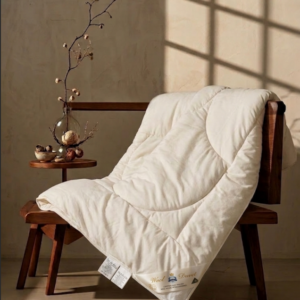

100% NZ Wool 500GSM Duvet Inner
Price range: $199.00 through $259.00 Select options This product has multiple variants. The options may be chosen on the product page - Sale!
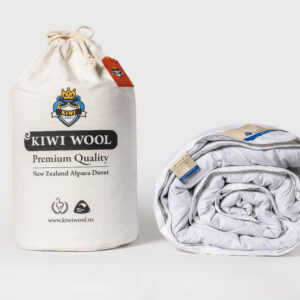
450GSM 100% Alpaca Duvet Inner
Price range: $253.50 through $363.50 Select options This product has multiple variants. The options may be chosen on the product page - Sale!
200GSM 100% Alpaca Duvet Inner
Price range: $176.90 through $243.90 Select options This product has multiple variants. The options may be chosen on the product page

Care: the practical difference
A down duvet that gets damp or dirty is a project. It usually needs a large-capacity machine or a specialist cleaner, followed by hours of low-heat drying with tennis balls to break up clumps. Skip a step and the fill mats together, leaving thin patches.
Wool and alpaca are simpler, though not maintenance free. Our inners are dry clean only, so do not machine wash or tumble dry them. Spot clean small marks with minimal water. The real secret is airing: hang a wool duvet in the sun and an alpaca duvet outdoors in the shade for a day or two every so often, and the fibres refresh, dry out and regain their loft. Because alpaca is naturally anti-bacterial it does not need frequent washing at all. Our wool and alpaca duvet care guide sets out a simple routine.
Which should you choose?
- You run hot, wake sweaty or live somewhere humid: alpaca first, wool second, down last.
- You have asthma, eczema or dust mite allergies: alpaca or wool.
- You love a weighty, cocooning duvet: wool, especially the 500 GSM.
- You want the lightest possible winter warmth in a natural fibre: 450 GSM alpaca.
- You want one purchase for the whole year: the Alpaca Duvet Combo.
- You want the lightest, loftiest feel and none of the above applies: a quality down duvet will serve you well.
Still weighing alpaca against wool? Our alpaca vs wool duvet comparison covers the two natural fibres side by side.
Frequently asked questions
Is a wool duvet warmer than down?
Weight for weight, down is loftier and usually warmer. In practice a 450 GSM alpaca or 500 GSM wool inner gives winter warmth in most New Zealand homes, and because the fibres wick moisture the warmth feels steadier through the night rather than stuffy.
Are wool duvets better for allergies than feather duvets?
Feathers can trap dust and allergens. Our New Zealand wool is naturally anti-bacterial and non-allergenic and helps inhibit dust mites, and our alpaca is lanolin free, hypoallergenic and resistant to dust mites. Many allergy-prone sleepers find the switch makes a real difference.
Do wool and alpaca duvets feel heavy compared with down?
Wool is heavier and flatter than down, and some people find that weight comforting. Alpaca sits in between: our site puts it around 25% warmer and lighter than sheep’s wool, so a 450 GSM alpaca inner feels light for the warmth it gives.
Can I wash a wool or alpaca duvet like a down duvet?
No. Our wool and alpaca inners are dry clean only. Do not machine wash or tumble dry them. Spot clean small marks with minimal water and air the duvet regularly, wool in the sun and alpaca in the shade, to keep it fresh.
What GSM replaces a winter down duvet?
Our temperature guide puts winter at 400 to 500 GSM for alpaca and 450 to 600 GSM for wool, so choose the 450GSM 100% Alpaca Duvet Inner or the 100% NZ Wool 500GSM Duvet Inner. If you want two weights for the year, the Alpaca Duvet Combo buttons together to make 550 GSM.
Every Kiwi Wool duvet inner is made in our Auckland factory from New Zealand fibre, covered in OEKO-TEX certified cotton and backed by a 3-year warranty. Browse the range and pick the weight that matches the season you sleep in most.