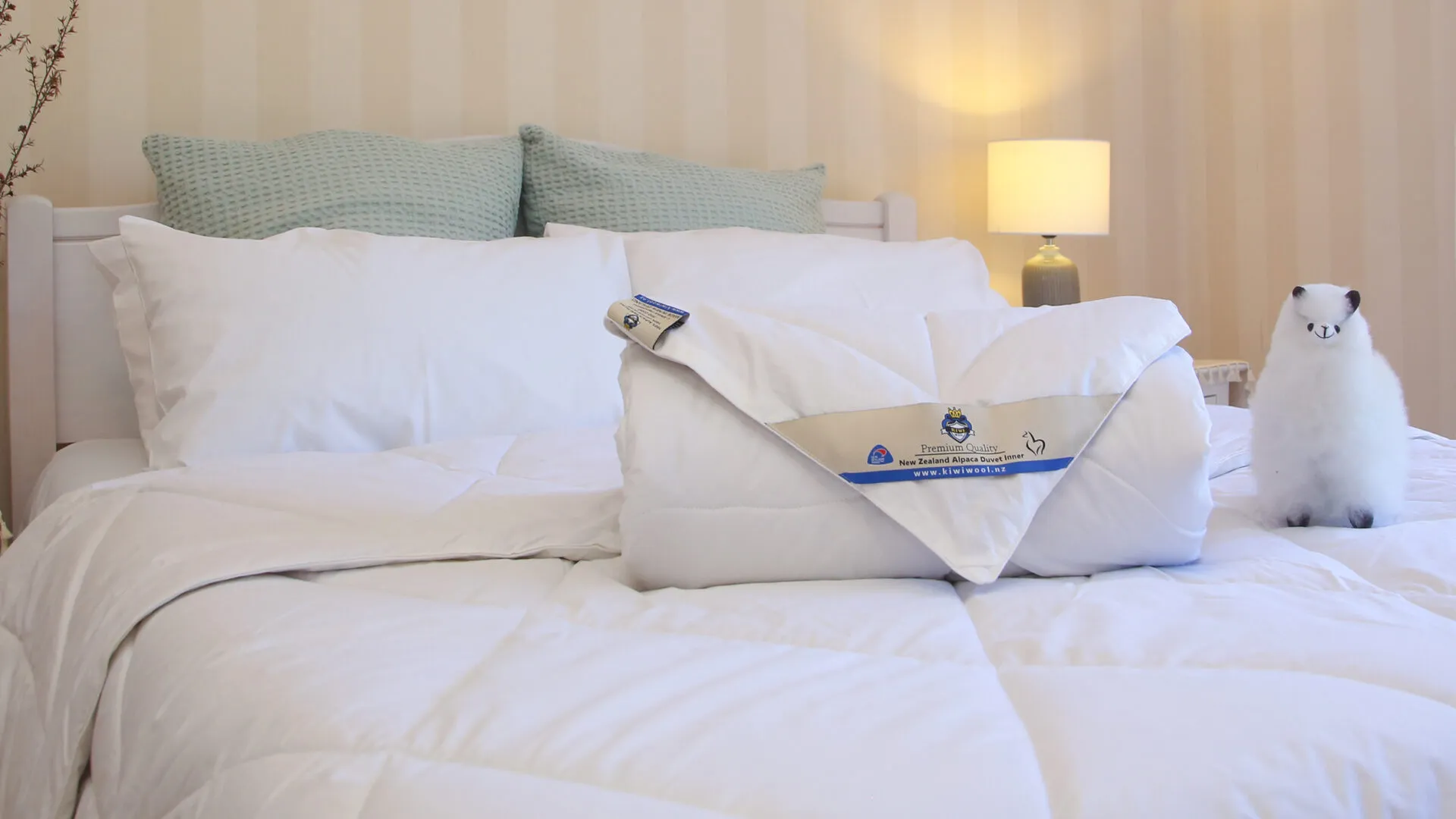
Choosing a duvet inner in NZ comes down to five decisions: the fill, the warmth, the size, the cover and where it was made. Get those right and you will sleep well for years, so this guide walks through each one in plain language and ends with a checklist you can take shopping.
In brief
- Natural fills such as New Zealand wool and alpaca breathe and regulate temperature. Synthetic fills are cheaper but can trap heat and moisture.
- Match the GSM to your bedroom: roughly 200 to 300 GSM for summer, 350 to 400 for spring and autumn, 450 to 600 for a cold winter.
- Buy the size that overhangs your mattress by 30 to 40 cm each side, check for a certified cotton cover, and ask where the duvet was actually made.
The five decisions
A duvet inner is the part you sleep under, inside the duvet cover. Because it is a hygiene item that cannot usually be returned once used, it pays to decide carefully. Work through these five questions in order: what is it filled with, how warm is it, what size do I need, what is the cover made of, and who made it and where.
Fill types compared
The fill decides how a duvet feels, breathes and ages. The table gives a fair summary of the common choices in New Zealand. The wool and alpaca rows describe our own products; the others describe how those fills generally behave.
| Fill | Warmth for weight | Breathability and moisture | Allergy suitability | Care |
|---|---|---|---|---|
| New Zealand wool | Good. Grounded, weightier feel. | Excellent. Wicks moisture, regulates temperature. | Naturally anti-bacterial, resists dust mites. Lanolin removed by washing. | Dry clean only. Air in the sun. |
| New Zealand alpaca | Excellent. Around 25% warmer and lighter than wool. | Excellent. Semi-hollow fibre breathes and wicks. | Lanolin-free, anti-bacterial, resists dust mites and mildew. | Dry clean only. Air in the shade. |
| Feather and down | Excellent when the fill is high quality. | Good, but feathers hold moisture in damp rooms. | Can trigger allergies for some sleepers. | Specialist cleaning. Needs regular shaking. |
| Microfibre or polyester | Fair. Bulky for the warmth it gives. | Limited. Can trap heat and moisture for some sleepers. | Low allergen, but harbours dust mites unless washed often. | Machine washable. Loses loft over time. |
| Bamboo and other plant fibres | Fair to good. | Good when pure, but often blended with polyester. | Generally low allergen. | Often machine washable. Check the blend. |
New Zealand wool
Wool is the traditional New Zealand choice for good reason. It breathes, draws moisture away from the body and keeps a dry, temperate bed in a cold, damp house. Our wool is double-washed without harsh chemicals to remove lanolin and plant residue. Read the wool duvet buying guide for the detail.
New Zealand alpaca
Alpaca gives the same regulation with less weight. The fibre is semi-hollow, so it traps insulating air, and it carries no lanolin, so it has no prickle and suits sensitive skin. It is also naturally anti-bacterial and resistant to dust mites and mildew. The alpaca duvet buying guide explains how to choose a weight.
Feather and down
A good down duvet is warm and light, but feathers can hold moisture in a damp New Zealand bedroom and some people react to them. If you are weighing the two, our wool vs down duvet comparison gives an honest account of where each wins.
Synthetic and plant fibres
Polyester and microfibre inners are inexpensive and machine washable, which suits some households. Their weakness is breathability: many sleepers find they wake hot and damp. Plant fibres such as bamboo can breathe well, but they are often blended with polyester, so read the fill percentage.
Warmth: choosing the right GSM
GSM means grams of fill per square metre. It is the honest way to compare warmth, and any maker who knows their duvet will state it. Our temperature guide gives these bands.
| Season | Climate | Alpaca | Wool |
|---|---|---|---|
| Summer | Hot | 200 GSM | 200 to 300 GSM |
| Spring and autumn | Mild | 250 to 350 GSM | 350 to 400 GSM |
| Winter | Cold | 400 to 500 GSM | 450 to 600 GSM |
Think about your bedroom, not just the season. A cold, uninsulated house in the south needs the top of the winter band. A well-heated apartment in Auckland may be comfortable with a 350 GSM alpaca inner all year. Couples who disagree can use a two-inner system, which we cover on the all-seasons duvet page. The duvet GSM guide goes deeper.
Size: overhang matters more than you think
A duvet should hang 30 to 40 cm over each side of the mattress so it does not pull off when one of you rolls over. Our duvet inners come in Single (140 x 210 cm), Double (180 x 210 cm), Queen (210 x 210 cm), King (240 x 210 cm) and Super King (265 x 210 cm). Couples on a Queen bed often size up to King for the extra drape. The NZ duvet size guide matches every New Zealand bed size to a duvet.
Cover and stitching
The cover should be cotton so the fill can breathe. Look for a down-proof weave that stops fibre escaping, pre-shrinking so the duvet keeps its shape, and an OEKO-TEX Standard 100 certificate, which confirms the fabric has been tested for harmful substances.
Quilting keeps the fill spread evenly. Poor quilting lets fill migrate into lumps and leaves cold patches. We quilt every duvet on a single-needle machine in our Auckland factory, stitch by stitch, because it holds the fill more evenly than mass-produced multi-needle quilting.
Where to buy a duvet inner
Factory-direct or department store
Department stores offer choice, but the duvet has usually passed through an importer and a distributor before it reaches the shelf. Buying directly from the maker means you can ask exactly what is inside, get advice from the people who made it, and deal with the same people if anything goes wrong. When you buy from Kiwi Wool you are buying from the manufacturer.
What NZ made should mean
Many duvet inners sold by large NZ retailers are filled or made offshore, even when the branding looks local. Ask where the duvet was made, not where the brand is based. Our duvets are filled, quilted and finished in Mangere, Auckland, from New Zealand wool and alpaca, and have been since 2002. See how we make them.
Warranty, returns and delivery
A natural duvet should come with a warranty that covers seam and fabric defects. Ours carries a 3-year warranty. Duvet inners are hygiene items and cannot be returned unless faulty, so confirm the size and weight before ordering. We ship within 5 working days, delivery by Aramex is usually within 7 days, and NZ orders over $150 NZD ship free.
Your duvet inner checklist
- Fill: 100% natural fibre, with the type and origin stated. Blends behave differently.
- Warmth: a GSM figure that matches your bedroom, not just the season.
- Size: 30 to 40 cm of overhang each side. Size up for couples.
- Cover: down-proof, pre-shrunk cotton, OEKO-TEX Standard 100 certified.
- Quilting: even, close stitching that keeps the fill in place.
- Origin: made in New Zealand, not just designed here.
- Support: a written warranty, clear returns terms and someone to call.
Our range at a glance
Every Kiwi Wool duvet inner and pillow is made in our Auckland factory from New Zealand fibre. Browse by fill through our wool duvet inners, alpaca duvet inners and natural pillows, or see the whole range below.
- Sale!
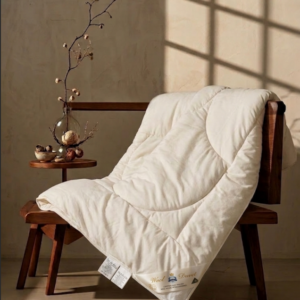

100% NZ Wool 500GSM Duvet Inner
Price range: $199.00 through $259.00 Select options This product has multiple variants. The options may be chosen on the product page - Sale!
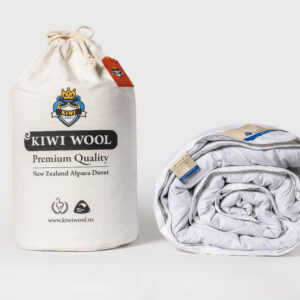
450GSM 100% Alpaca Duvet Inner
Price range: $253.50 through $363.50 Select options This product has multiple variants. The options may be chosen on the product page - Sale!
350GSM 100% Alpaca Duvet Inner
Price range: $232.20 through $322.20 Select options This product has multiple variants. The options may be chosen on the product page - Sale!
200GSM 100% Alpaca Duvet Inner
Price range: $176.90 through $243.90 Select options This product has multiple variants. The options may be chosen on the product page - Sale!
Alpaca Duvet Combo (200 + 350 GSM)
Price range: $375.50 through $545.30 Select options This product has multiple variants. The options may be chosen on the product page - Sale!
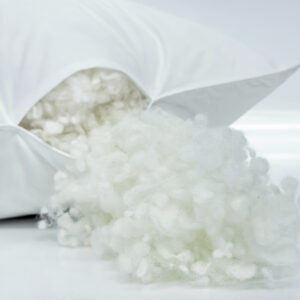
100% NZ Wool Pillow
Original price was: $158.00.$79.00Current price is: $79.00. Add to cart

If you would like a hand choosing, call us on 09 622 1318 or email info@kiwiwool.nz. We make every duvet inner ourselves, so we can tell you exactly which fill, weight and size will suit your bedroom.
Frequently asked questions
What is the best duvet inner for New Zealand?
For most New Zealand bedrooms a natural fill wins because our houses are cold and damp in winter and humid in summer. Wool and alpaca both breathe and wick moisture. Choose wool for a grounded feel and alpaca for the lightest warmth, then match the GSM to your room.
What is the difference between a duvet and a duvet inner?
In New Zealand the duvet inner is the filled, quilted layer you sleep under, and the duvet cover is the washable fabric case that goes over it. Some people use “duvet” for either, so check which one a listing means.
How do I know what GSM I need?
Use our temperature guide: about 200 to 300 GSM for summer, 350 to 400 for spring and autumn, and 450 to 600 for a cold winter, with alpaca sitting slightly lower than wool for the same warmth. Our GSM guide explains the numbers.
Can I return a duvet inner if it is not right?
Duvet inners and pillows are hygiene items, so they cannot be returned unless faulty. Faulty, incorrect or wrong-size items should be reported as soon as possible. That is why we publish sizes, weights and GSM for every product and are happy to advise before you buy.
Where are Kiwi Wool duvet inners made?
In our own factory at Unit B, 80 Richard Pearse Drive, Mangere, Auckland, from New Zealand wool and alpaca. We have been making duvets there since 2002 and you buy directly from us as the manufacturer.