
By Kiwi Wool, makers of alpaca and wool bedding in Mangere, Auckland, since 2002.
Alpaca and cashmere are both soft, warm, luxury animal fibres. Cashmere is finer, so it feels a little softer, while alpaca is stronger, semi-hollow and free of lanolin, which makes it warmer for its weight and far more practical as bedding.
For anyone weighing up the two fibres, whether for clothing or for bedding.
This comparison sits within our bedding materials collection.
Alpaca vs cashmere at a glance
| Alpaca | Cashmere | |
|---|---|---|
| Comes from | Alpacas | The fine undercoat of cashmere goats |
| Fineness | Fine grades under 20 microns; adult fibre coarser | Averages 19 microns or finer |
| Structure | Semi-hollow fibre | Solid fine fibre |
| Lanolin | None | Little; dehaired and scoured |
| Strength and pilling | Strong; resists pilling | Delicate; prone to pilling |
| Warmth for weight | Very warm | Very warm |
| Price | Premium | Usually higher |
| Common uses | Knitwear, throws, duvet fill | Mostly knitwear and fine fabrics |
Softness and fineness
Fineness is measured in microns, the diameter of a single fibre. Under the US Wool Products Labeling Act, a product can only be called cashmere if its fibre averages 19 microns or finer. Alpaca varies more: fibre guides class the finest alpaca under 20 microns and adult fibre in the low 30s. So the finest alpaca is close to cashmere, and cashmere is consistently fine.
Warmth
Both fibres are very warm. Alpaca has an extra trick: each fibre is semi-hollow, so it traps air inside as well as between fibres. That is why an alpaca duvet feels warm without much weight.
Itch and sensitive skin
Both feel smooth against the skin. Alpaca is naturally free of lanolin, the grease in sheep’s wool that some people react to, which is one reason we recommend it for sensitive sleepers.
Durability and care
Cashmere is delicate and tends to pill with wear. Alpaca is a stronger fibre and holds up well to years of use, which matters for something you sleep under every night. Our alpaca inners need no regular washing: air them in the shade and dry clean when needed.
What the difference means for bedding
Cashmere is mostly spun into knitwear, and its fineness and cost make it unusual as a duvet fill. Alpaca brings much of the same softness and warmth in a fibre that is strong, breathable and naturally free of lanolin, which is why it makes such a good duvet. Our alpaca duvet buying guide explains the weights, and alpaca vs merino compares alpaca with fine wool.
- Sale!
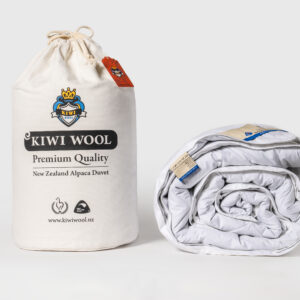

450GSM 100% Alpaca Duvet Inner
Price range: $273.50 through $373.50 Select options This product has multiple variants. The options may be chosen on the product page - Sale!
350GSM 100% Alpaca Duvet Inner
Price range: $242.20 through $342.20 Select options This product has multiple variants. The options may be chosen on the product page - Sale!
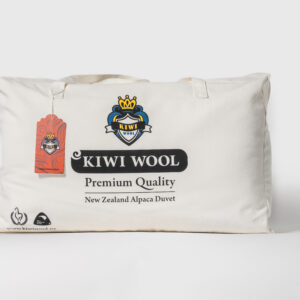
Alpaca Duvet Combo (200 + 350 GSM)
Price range: $409.50 through $595.30 Select options This product has multiple variants. The options may be chosen on the product page
Frequently asked questions
Is alpaca warmer than cashmere?
Both are very warm. Alpaca’s semi-hollow fibre traps extra air, so it is especially warm for its weight, which suits bedding.
Is alpaca softer than cashmere?
Cashmere is consistently finer, so it often feels a little softer. The finest grades of alpaca come close.
Is alpaca or cashmere better for a duvet?
Alpaca. It is strong, breathable and free of lanolin, and it is widely used as duvet fill, while cashmere is mostly used for knitwear.
Feel the difference alpaca makes in bed with one of our inners.
About this guide
We are Kiwi Wool, a family-owned maker of alpaca and wool duvet inners and pillows. We card, quilt and sew every inner at our factory in Mangere, Auckland, where we have made bedding since 2002. The cashmere definition comes from the US Wool Products Labeling Act and the alpaca grades from published fibre-grading guides; the rest draws on the alpaca we work with. This guide was last reviewed in November 2026. If you spot something that needs correcting, email info@kiwiwool.nz or call 09 622 1318.