Understand the two covers
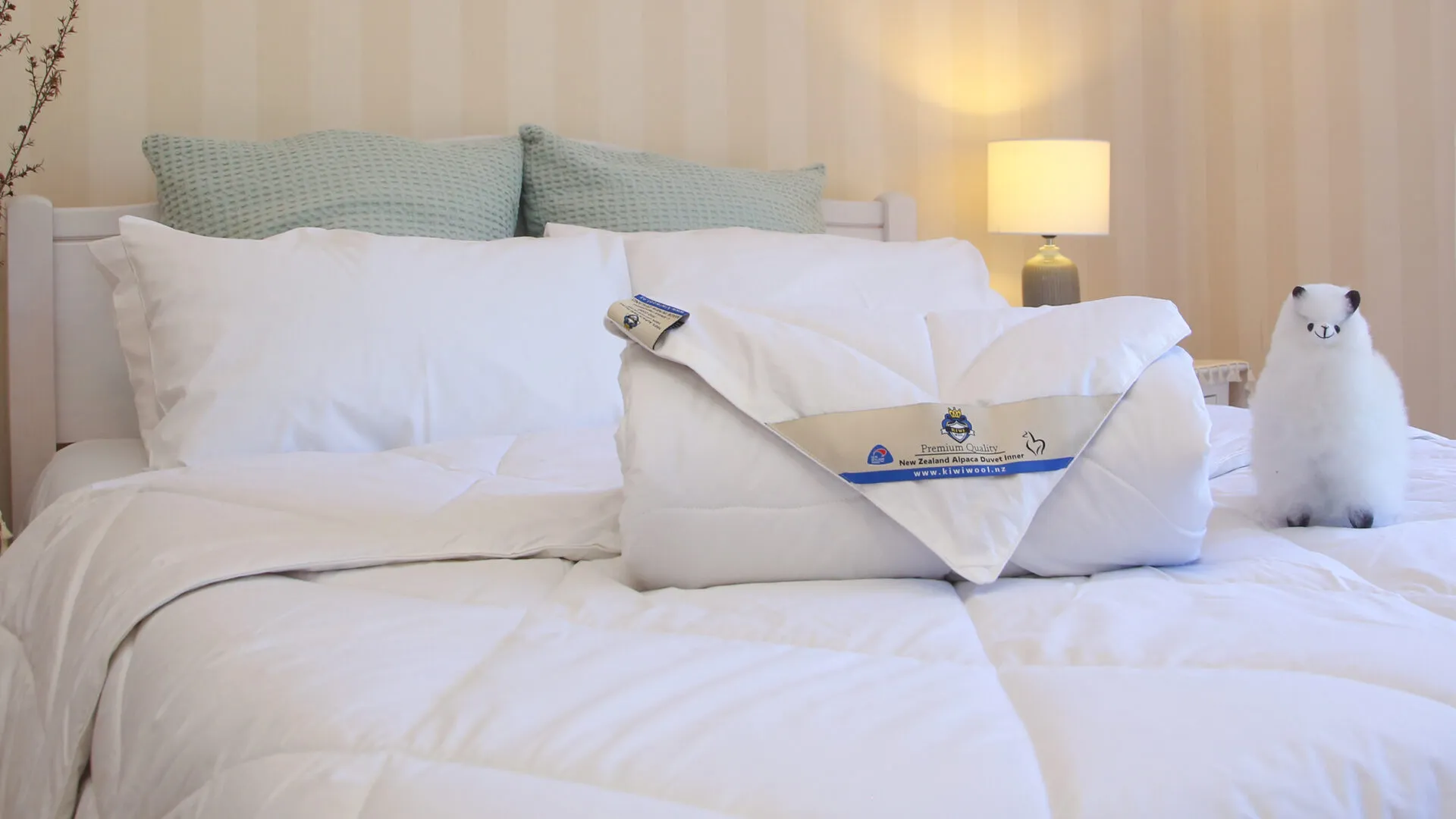
Kiwi Wool’s wool and alpaca inners have a cotton casing sewn around their filling. That casing stays with the inner. A removable duvet cover goes over the whole thing and can be taken off for laundering according to its own instructions.
The distinction matters because our current inners are dry-clean only. A washable duvet cover does not change the inner’s care requirements, but it does give you an outer layer that is easier to remove when changing the bed.
Choose by feel, not just thread count
British Wool recommends a natural-fibre duvet cover for wool bedding. Cotton and linen are sensible materials to examine, but the feel still depends on the particular fabric, weave and finish. Check a sample if feel is an important part of your decision.
| Option | What to compare | Question to ask |
|---|---|---|
| Cotton | Different weaves and finishes can feel quite different. | Do I like the actual fabric against my skin? |
| Linen | Look at the texture and relaxed appearance of the specific cover. | Am I happy with its feel and care routine? |
| A blend | Read all named fibres and proportions. | What is the complete composition, rather than the headline material? |
| Any fabric | Size, closure and laundering instructions | Will it fit my inner and fit into my laundry routine? |
A high thread-count number is not a complete quality test. It does not tell you whether the cover is the right size or whether you enjoy its weight and texture.
Make the size check concrete
- Find the inner’s finished width and length on its label or confirm them with Kiwi Wool.
- Read the cover’s dimensions in centimetres. Do not rely on “Queen”, “King” or “Super King” alone.
- Check the cover maker’s washing and shrinkage guidance, especially if measuring an already-used cover.
- Look at the opening and any ties. Ask whether they are compatible with the inner you have.
- Use the NZ duvet size guide for bed coverage as well as insert-to-cover fit.
When shopping internationally, a familiar size name can hide a different dimension. Checking two numbers before ordering is easier than discovering an empty border or a crowded inner when making the bed.
If the bed feels different after a cover change
Compare the new cover with the old one while keeping the inner and other layers the same. Notice texture, weight, noise and whether the inner stays evenly spread. Changing one layer at a time helps you identify the reason for the difference.
If the new combination feels too warm, reassess all layers before buying a heavier or lighter inner. If it bunches at one end, use the cover-slip checks. If fabric noise is the concern, the rustling guide helps separate the cover from the sewn casing.
Take a short specification into the shop
My inner: product name and finished width × length.
My preferred feel: describe a cover I already enjoy using.
My laundry needs: washing method, drying space and frequency.
My fit check: closure, compatible ties and maker’s size guidance.
Kiwi Wool makes inners and pillows rather than covers, so choose the removable cover from its own specification and ask us about the inner when compatibility is uncertain.
A few useful answers
Does a Kiwi Wool duvet need a removable cover?
A removable cover is a practical way to protect the inner during everyday use and handle routine laundering separately. Follow both products’ care labels.
Can cotton and linen both work?
Both are natural-fibre options to consider. The particular fabric’s feel, dimensions and care requirements should guide your choice.
Will a cover make a winter inner suitable for summer?
Do not rely on a cover to change the intended warmth of the inner. Kiwi Wool has a separate lighter alpaca option, explained in our summer duvet guide.