
By Kiwi Wool, makers of alpaca and wool bedding in Mangere, Auckland, since 2002.
The healthiest bedding is breathable, easy to keep free of dust mites and made without harmful substances. In practice that means natural fibres such as cotton, wool and alpaca, covers you can wash hot, and textiles tested to a standard such as OEKO-TEX Standard 100.
For people who want their bedding to support better sleep and a cleaner bedroom, especially with allergies or sensitive skin.
This guide sits within our bedding materials collection.
What makes bedding healthy
- Breathability. Fibres that move moisture away keep the bed dry, which is more comfortable and less inviting to dust mites and mould.
- Dust mite control. Covers you can wash hot, and a fill that stays dry.
- Fewer harmful substances. Textiles tested for harmful substances, and natural fills.
- A comfortable temperature. Not overheating means less tossing and turning.
Fibres compared
| Fibre | Breathability | Dust mites | Notes |
|---|---|---|---|
| Cotton | Good | Wash covers hot | The best choice for sheets and covers |
| Wool | Excellent; wicks moisture | Resists dust mites | Ours is double-washed without harsh chemicals |
| Alpaca | Excellent; wicks moisture | Resists dust mites | Naturally free of lanolin |
| Feather and down | Moderate | Can shed dust | Some people react to it |
| Polyester | Lower; can trap heat | Often washable | Made from petroleum-based fibre |
Dust mites: what ASCIA advises
The Australasian Society of Clinical Immunology and Allergy (ASCIA) recommends washing sheets and pillowcases weekly in hot water over 60 C, and covering mattresses, pillows and quilts with dust mite resistant covers washed at least every two months. Our hypoallergenic pillow guide covers this in more detail.
Chemical free bedding: what labels mean
No textile is truly free of chemicals, and chemical free is a marketing phrase rather than a standard. What you can check is certification. OEKO-TEX Standard 100 tests textiles for harmful substances; our cotton covers are certified to it. Organic labels refer to how the fibre was grown and processed, and are separate. Look for a named standard rather than a vague claim.
Our approach
We use New Zealand wool, double-washed without harsh chemical agents, and New Zealand alpaca, which needs no lanolin removal. Every inner is cased in 100% cotton that is down-proof, pre-shrunk and certified to OEKO-TEX Standard 100, and we make everything in our own Auckland factory. Read more in the benefits of wool bedding and down-proof cotton explained.
- Sale!
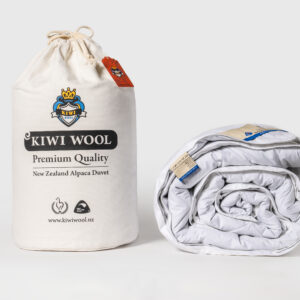

350GSM 100% Alpaca Duvet Inner
Price range: $242.20 through $342.20 Select options This product has multiple variants. The options may be chosen on the product page - Sale!
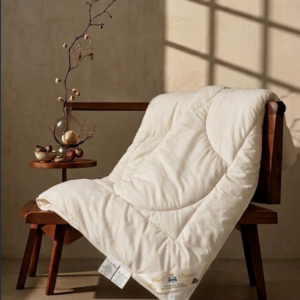
100% NZ Wool 500GSM Duvet Inner
Price range: $199.00 through $269.00 Select options This product has multiple variants. The options may be chosen on the product page - Sale!
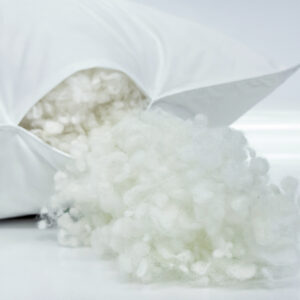
100% NZ Wool Pillow
Original price was: $158.00.$89.00Current price is: $89.00. Add to cart

Frequently asked questions
What is the healthiest material for bedding?
Breathable natural fibres: cotton for sheets and covers, and wool or alpaca for duvets and pillows, which wick moisture and resist dust mites.
What does chemical free bedding mean?
It is a marketing phrase, not a standard. Look for a named certification such as OEKO-TEX Standard 100, which tests textiles for harmful substances.
Is wool bedding good for allergies?
Wool resists dust mites and keeps the bed dry. If you react to wool itself, alpaca is an alternative because it has no lanolin.
Choose natural bedding made in New Zealand.
About this guide
We are Kiwi Wool, a family-owned maker of alpaca and wool duvet inners and pillows. We card, quilt and sew every inner at our factory in Mangere, Auckland, where we have made bedding since 2002. The dust mite advice comes from ASCIA’s allergen minimisation guidance and the certification details from our own product specifications. It is general information, not medical advice. This guide was last reviewed in November 2026. If you spot something that needs correcting, email info@kiwiwool.nz or call 09 622 1318.