
By Kiwi Wool, makers of alpaca and wool bedding in Mangere, Auckland, since 2002.
A down alternative duvet is any inner filled with something other than feathers and down. Microfibre is the most common, but wool and alpaca are natural down alternatives that breathe better and handle New Zealand’s damp, changeable nights well.
For people moving away from a feather and down duvet, for allergies, ethics, care or comfort.
This comparison is part of our bedding materials collection.
Why people choose a down alternative
- Down can shed feather dust, and some people react to it.
- Some people prefer not to use animal down.
- Down needs regular shaking to keep its loft.
- Down is very warm for its weight, which can be too warm on humid nights.
Down alternatives compared
| Fill | Warmth for weight | Breathability | Care | Feel |
|---|---|---|---|---|
| Microfibre and polyester | Good when new | Can trap heat and moisture | Often machine washable | Light, can feel synthetic |
| Wool | Good; heavier than alpaca | Excellent; wicks moisture | Air; dry clean only | Weighty, cocooning |
| Alpaca | Very good; semi-hollow fibre | Excellent; wicks moisture | Air in the shade; dry clean only | Light and soft |
Microfibre: cheap and washable
Microfibre inners are made from fine polyester. They are affordable and many can go in the washing machine, but synthetic fibres do not absorb and release moisture the way natural fibres do, so some people find them clammy. Our wool vs polyester duvet guide compares them in detail.
Wool: the traditional natural alternative
Wool keeps you warm without overheating because it wicks moisture away from your body. Our 500 GSM wool inner is our warmest single inner and weighs about 3.4 kg in queen. Read more in wool vs feather and down duvets.
Alpaca: the closest to down’s lightness
Alpaca fibre is semi-hollow, so it traps warm air inside each fibre as well as between them. That makes it lighter for its warmth than wool, which is why it feels closest to down of the natural options. It is also naturally free of lanolin. Our alpaca vs down comparison goes further.
- Sale!
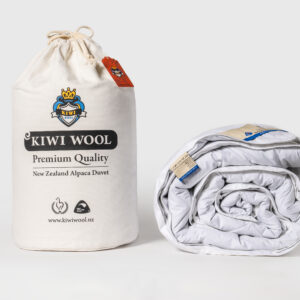

450GSM 100% Alpaca Duvet Inner
Price range: $273.50 through $373.50 Select options This product has multiple variants. The options may be chosen on the product page - Sale!
350GSM 100% Alpaca Duvet Inner
Price range: $242.20 through $342.20 Select options This product has multiple variants. The options may be chosen on the product page - Sale!
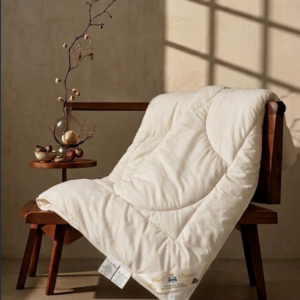
100% NZ Wool 500GSM Duvet Inner
Price range: $199.00 through $269.00 Select options This product has multiple variants. The options may be chosen on the product page

Choosing the weight for NZ seasons
Down is sold by fill power; natural fibres are sold by GSM, the grams of fill per square metre. Use this as a starting point, and see our guide to duvet fill power if you are comparing labels.
| Season | Alpaca | Wool |
|---|---|---|
| Summer | 200 GSM | Lightest available |
| Spring and autumn | 250 to 350 GSM | 350 to 400 GSM |
| Winter | 400 to 500 GSM | 450 to 600 GSM |
NZ orders over $150 (after discounts) ship free. Orders generally leave us within 5 working days and Aramex usually delivers within 7 days. Every inner carries our 3-year warranty against manufacturing defects.
Frequently asked questions
What is a down alternative duvet?
A duvet filled with something other than feathers and down, such as microfibre, wool or alpaca.
What is the best down alternative duvet?
It depends on what you want. Microfibre is cheap and washable; wool is warm and breathable; alpaca is the lightest natural option for its warmth.
Is a down alternative as warm as down?
Down is very warm for its weight. Alpaca comes closest of the natural fibres, and a higher GSM inner gives the same warmth with a little more weight.
Try a natural down alternative from our Auckland factory.
About this guide
We are Kiwi Wool, a family-owned maker of alpaca and wool duvet inners and pillows. We card, quilt and sew every inner at our factory in Mangere, Auckland, where we have made bedding since 2002. The comparisons draw on the fibres we work with every day and our own product specifications. This guide was last reviewed in November 2026. If you spot something that needs correcting, email info@kiwiwool.nz or call 09 622 1318.