
By Kiwi Wool, makers of alpaca and wool bedding in Mangere, Auckland, since 2002.
A hypoallergenic pillow is one made to reduce the chance of an allergic reaction, but the word has no fixed standard. What helps most with the common bedroom allergy, house dust mites, is a breathable fill, a tightly woven or dust mite resistant cover and regular care.
For people with allergies, asthma or sensitive skin who want to choose a pillow that helps rather than hinders.
This guide sits within our pillow fillings collection.
What hypoallergenic means on a pillow
Hypoallergenic is a description, not a certification. It usually means the fill is less likely to cause a reaction, for example because it has no feather dust. For most people with bedroom allergies, the real trigger is house dust mites, which live in all bedding, so the cover and the care routine matter as much as the fill.
What ASCIA recommends for dust mites
The Australasian Society of Clinical Immunology and Allergy (ASCIA) recommends:
- Washing sheets, pillowcases and other bedding once a week in hot water (over 60 C).
- Covering mattresses, pillows and quilts with dust mite resistant covers, washed at least every two months.
- Vacuuming and damp dusting the bedroom regularly.
A pillow that cannot be machine washed can still work well for allergy sufferers if it is kept inside a dust mite resistant cover and the pillowcase is washed hot each week.
Fills compared for allergies
| Fill | Allergy notes |
|---|---|
| Feather and down | Can shed dust; some people react to it |
| Polyester fibre | No animal material; often machine washable |
| Memory foam and latex | Dense and dust-resistant; some people react to latex itself |
| Wool | Resists dust mites and wicks moisture; ours is double-washed to remove lanolin |
| Alpaca | Naturally free of lanolin, smooth on sensitive skin and resists dust mites |
Our pillows for sensitive sleepers
Both of our pillows use natural fibres that breathe and wick moisture away, keeping the pillow dry, which dust mites dislike. Our alpaca pillow is naturally free of lanolin, and our wool pillow’s fibre is double-washed with an anti-bacterial treatment that limits dust mites and allergens. Both have cotton covers certified to OEKO-TEX Standard 100, which tests textiles for harmful substances.
| Pillow | Fill | Size | Feel | Care |
|---|---|---|---|---|
| 100% NZ Wool Pillow | New Zealand wool pearls | 50 x 75 cm, about 17 cm high, 1000 g | Medium, with firmer support | Spot clean, air in the sun |
| Premium NZ Alpaca Adjustable Pillow | New Zealand alpaca fleece pearls | 45 x 70 cm, Medium 16 cm or High 18 cm | Soft; add or remove fill to set the height | Dry clean, spot clean small marks |
- Sale!


Premium New Zealand Alpaca Adjustable Pillow
Price range: $155.50 through $165.50 Select options This product has multiple variants. The options may be chosen on the product page - Sale!
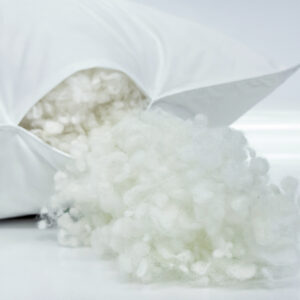
100% NZ Wool Pillow
Original price was: $158.00.$89.00Current price is: $89.00. Add to cart
Non toxic pillow: what to look for
If you want a pillow with fewer chemicals, look for natural fills and a textile certification such as OEKO-TEX Standard 100 on the cover. Our guide to the healthiest bedding covers labels like chemical free and organic, and our article on hypoallergenic alpaca duvets covers the duvet side.
Care for an allergy-friendly pillow
Use a protector or dust mite resistant cover, wash your pillowcase hot each week and air the pillow outdoors regularly. Spot clean our wool pillow and dry clean the alpaca pillow when needed. Our pillow protector and case guide explains the layers.
NZ orders over $150 (after discounts) ship free, orders generally leave us within 5 working days and Aramex usually delivers within 7 days. Pillows cannot be returned unless faulty, for hygiene reasons, so call 09 622 1318 if you would like help choosing first.
Frequently asked questions
What is the best hypoallergenic pillow?
One with a fill you do not react to, kept in a dust mite resistant cover and cared for regularly. Natural wool and alpaca resist dust mites and stay dry.
Are wool pillows good for allergies?
Wool resists dust mites and wicks moisture. Ours is double-washed to remove lanolin, but if you know you react to wool itself, choose alpaca instead.
Is alpaca hypoallergenic?
Alpaca is naturally free of lanolin and resists dust mites, which is why it suits many sensitive sleepers.
How often should I wash pillowcases if I have allergies?
ASCIA recommends washing pillowcases and sheets once a week in hot water over 60 C.
Choose a natural pillow for sensitive sleepers, or call 09 622 1318 with any questions.
About this guide
We are Kiwi Wool, a family-owned maker of wool and alpaca bedding. We make our wool pearl pillow and adjustable alpaca pillow, along with our duvet inners, in our own factory in Mangere, Auckland, where we have worked since 2002. The dust mite advice comes from ASCIA’s published allergen minimisation guidance, and the product details from our own specifications. It is general information, not medical advice. This guide was last reviewed in November 2026. If you spot something that needs correcting, email info@kiwiwool.nz or call 09 622 1318.