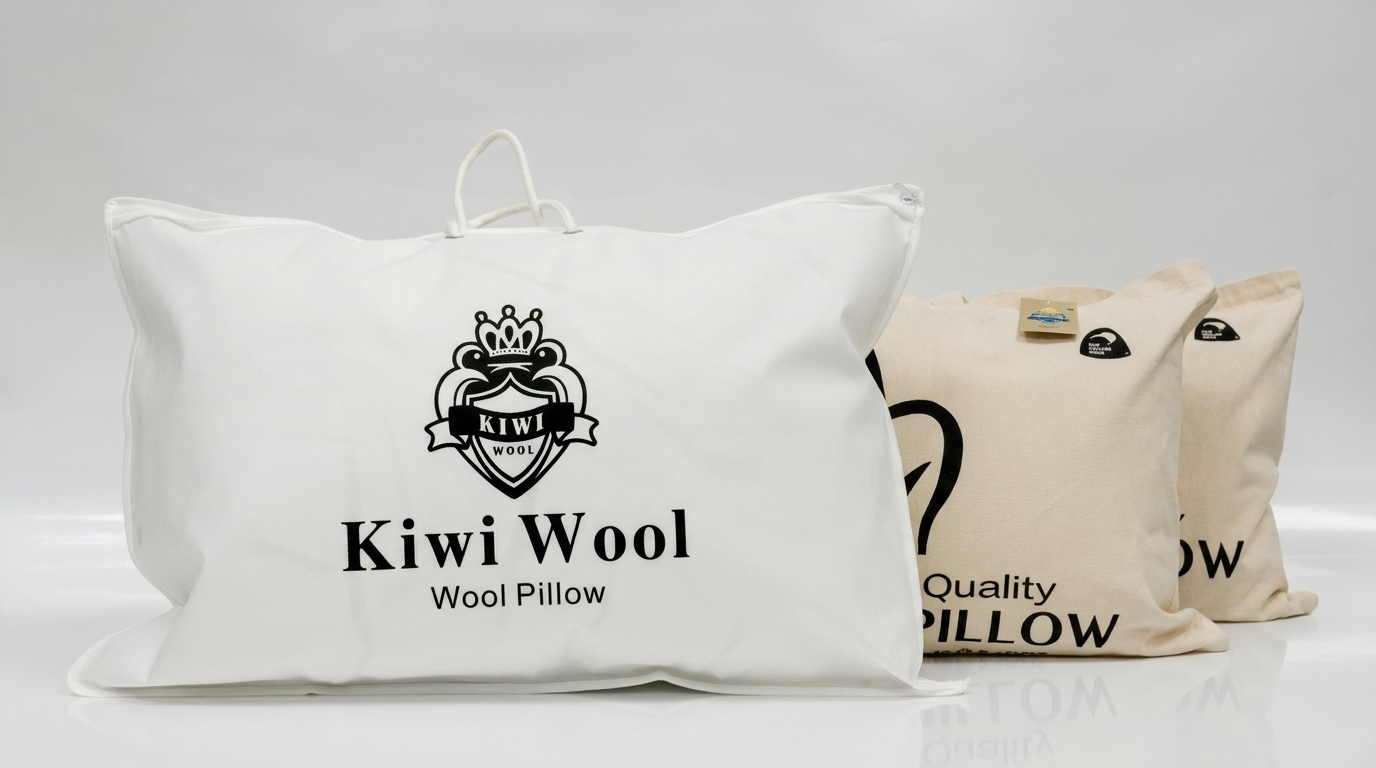
Identify the part before you clean it
A pillowcase comes off for normal laundering. A separate protector may also be removable. The cotton casing around the filling is part of the pillow itself. On the adjustable alpaca model, opening the zip lets you change the fill, but it does not establish a separate wash instruction for that casing.
Check the pillow’s label alongside the current product instructions. If the label on an older pillow differs from the website, ask Kiwi Wool to identify that version before choosing a cleaning method.
A care decision you can use today
| What needs cleaning? | Next step | Avoid |
|---|---|---|
| Pillowcase or separate protector | Remove it and follow its own laundry label. | Assuming its wash setting applies to the filled pillow. |
| A small mark on the pillow casing | Use gentle spot cleaning with minimal water, consistent with Kiwi Wool guidance. | Soaking the filling or vigorous rubbing. |
| The whole alpaca pillow | Use a professional cleaner experienced with natural fibres; show the dry-clean-only label. | Machine washing or tumble drying. |
| An older wool pillow with unclear instructions | Send the label and product details to Kiwi Wool before a deeper clean. | Copying another brand’s washing instructions. |
An ordinary care routine
Use a well-fitting pillowcase and, if you choose one, a separate protector with a suitable care label. When changing the bedding, inspect the casing for marks, check the zip on the adjustable model is closed, and let the pillow air.
Kiwi Wool recommends airing wool in the sun and alpaca in the shade. Pick dry conditions and bring bedding back indoors before it becomes damp. The aim is to care for the product without introducing unnecessary moisture.
For the adjustable alpaca model, gently redistribute the pearls if the fill feels uneven. If you remove filling to adjust the feel, keep it clean and dry and put only appropriate filling back. See the step-by-step adjustment routine.
Why online washing advice disagrees
Some wool pillows are specifically made and labelled for machine washing; others are not. Those are different products, with different instructions.
Another brand’s washing method is not permission to wash a Kiwi Wool pillow. The useful lesson is to identify the maker, the model and whether the instruction applies to the cover or the whole pillow. “Wool pillow” alone is not enough information to choose a wash cycle.
When a small spot clean is not enough
If liquid has soaked into the filling, the pillow has a persistent unusual smell, or the casing is damaged, ask for product-specific guidance. Explain what happened and any cleaning already attempted. For alpaca, make clear that the product’s instruction is dry-clean only when speaking to a cleaner.
- Photograph the product and care labels.
- Note whether the affected area is the removable case, sewn casing or filling.
- Describe the mark or spill and roughly when it happened.
- List any water, detergent, heat or other treatment already used.
- Keep the purchase details handy if asking the maker for help.
This information makes the next recommendation more specific.
A few useful answers
Can I put an alpaca pillow in the washing machine?
Not the current Kiwi Wool adjustable alpaca pillow. Its published instructions say dry-clean only and not to machine wash it.
Can I wash just the zipped cotton cover?
Do not infer that from the zip. For this model the zip is for adjustment; ask Kiwi Wool before separating parts or applying a different cleaning routine.
Does airing replace cleaning after a major spill?
No. Airing is part of routine care. A substantial spill needs advice appropriate to the filling, the affected area and the product label.